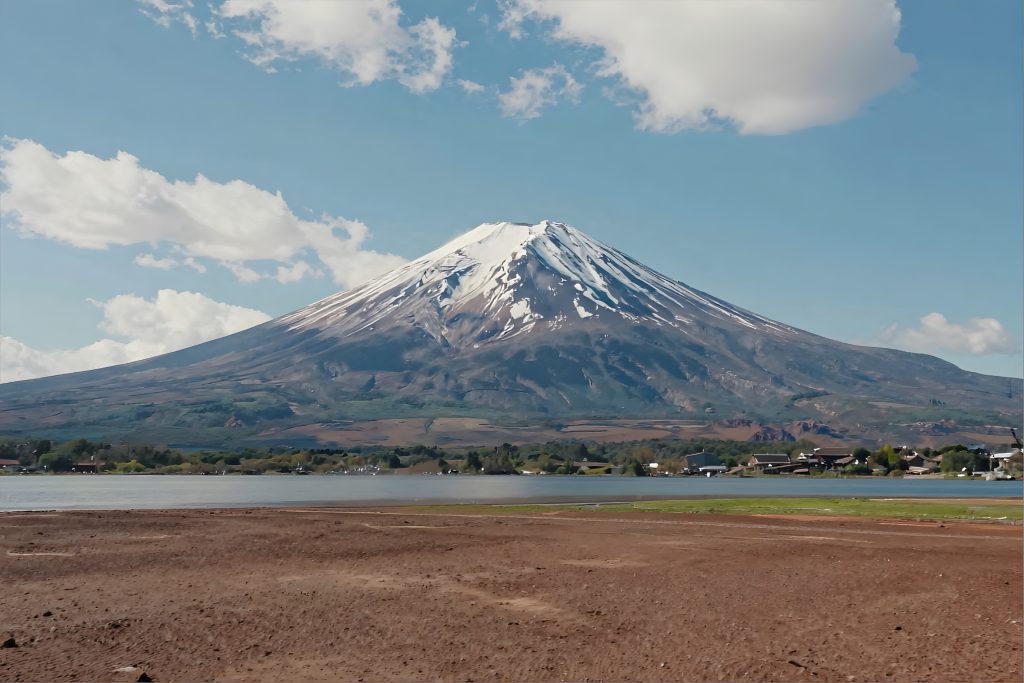
introduction of mountain fuji Mount Fuji, highest mountain in Japan. It rises to 12,388 feet (3,776 meters) near the Pacific Ocean coast in Yamanashi and Shizuoka ken (prefectures) of central Honshu, about 60 miles (100 km) west of the Tokyo-Yokohama metropolitan area. It is a volcano that has been dormant since its last eruption, in 1707, but is still generally classified as active by geologists. The mountain is the major feature of Fuji-Hakone-Izu National Park (1936), and it is at the center of a UNESCO World Heritage site designated in 2013.
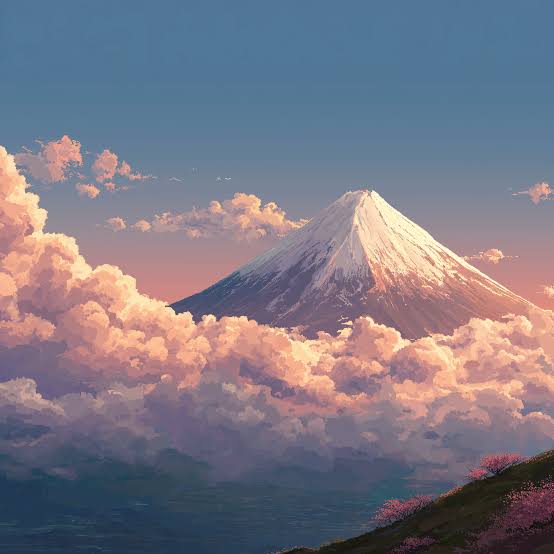
Mount Fuji
Mount Fuji Field of pink and blue sky rising near Fuji, Japan, with Mount Fuji rising in the background.
Fuji-Hakone-Izu National Park




Festivals in Japanese Culture
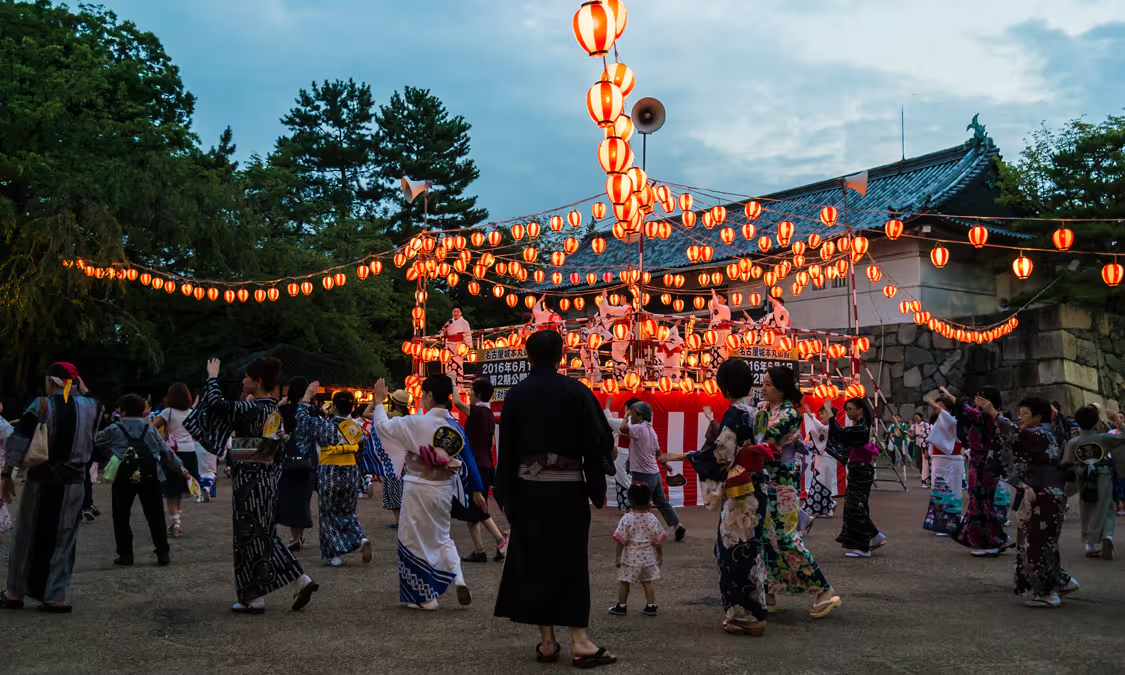
There are relatively a higher number of festivals in Japan compared to other countries because Japanese religions are related to celebrating the harvest seasons and seasonal changes. Each of the 47 Japanese prefectures has a different festival which usually takes place in the summer. Locals usually participate in these festivals by wearing a yukata and sandals. The most famous Japanese festivals are:
- Gion Festival in Kyoto. The largest parade in Japan which started in the 800’s when there was an epidemic similar to the Coronavirus.
2. Awa Odori Festival in Tokushima. A Dance festival held during the Obon-Week (the week when the spirits of the deceased are believed to visit the world).
3. Nebuta Festival in Aomori. A festival dedicated to ancient warriors in Northern Japan.
1.Holidays and Celebrations in Japanese Culture
If you look at the Japanese calendar, you would notice that there is a major cultural celebration almost every month. Japanese people like celebrating seasonal changes to show their appreciation of new beginnings. The three most important celebrations in Japan are:
1) The new year’s day. Japanese people visit a shrine after the midnight on Dec 31 to make a wish.2) Cherry blossom celebrations in April. It is a custom to have a picnic under the cherry trees.3) The Obon Holiday in August. Japanese people visit their hometown to commemorate the spirits of those who passed away.
2.Food in Japanese Culture
The staple food in Japan is rice, not bread. In the past, the tax was collected as rice and samurais’ salary was paid in rice. Japanese people believe rice is healthier than wheat which has more carbs and is more difficult to digest. Up until the 19th century, the Japanese rarely ate meat because of Buddhism which bans eating animals. For the same reason, they also did not consume dairy, that is why some Japanese tend to be lactose intolerant. Fresh sushi is the most popular food throughout Japan even though it used to be the cheap fast-food for workers in the 1800’s.Nowadays, a typical Japanese breakfast consists of fried fish and miso soup while a typical lunch is ramen noodles or rice bowl with deep fried meat.
3.Clothing in Japanese Culture – Kimono
Traditionally, Japanese people wear a one-piece garment called kimono which emerged during the Heian Period (794-1185). Kimono is made out of silk and each motif has a meaning. Cranes represent longevity; pine-trees represent the new year; the Chrysanthemum flower represents the imperial family. The summer kimono is called “yukata” and the wedding kimono is called “uchikake.” Kimonos usually have long sleeves for wind to pass through and cool down the body. While children wear kimono with bright colors and flower designs, the elderly wear simple kimonos with simple motifs. Nowadays, Japanese people wear Western clothes at work and school but prefer kimono for social occasions and ceremonies.
4.Arts in Japanese Culture
Japanese arts can be traced back to the indigenous populations who roamed the main island thousands of years ago.The pottery vessels made by the “Jomon” 12,000 years ago are considered as the oldest in the world. Later, the Japanese arts were influenced by Buddhism and Chinese culture. The earliest forms of Buddhist statues and monochrome paintings at temples show resemblance to the Chinese arts. However, many unique forms of art, such as ikebana, ukiyo-e and kabuki, started emerging when the influence of China started diminishing after the rise of the samurai class in the 10th century.
5.Aesthetics in Japanese Culture
Japanese arts were influenced by Zen Buddhism where minimalism, modesty and simplicity are very important. The perception of beauty is different from the ideal beauty concept in the West. Japanese artisans believe things that are old, asymmetrical and natural are more aesthetically appealing than perfectly symmetrical new objects. Silence, open space, elegant simplicity and rustic patina are always visible in all aspects of Japanese arts.
6.Values in Japanese Culture
Japan is a conformist society where harmony, mutual respect and group consensus are valued. Other values such as collectiveness, diligence and conflict avoidance are actually the results of the need for social harmony. Japanese religion also has an influence on common Japanese values. The values of purity and cleanliness come from Shintoism while perfectionism and minimalism come from zen Buddhism. Additionally, the spread of East Asian teachings in Japan may have affected the culture. It is said that the values of long term thinking,perseverance,respect for social hierarchy and respect for the elderly come from Confucianis
1.Taking off shoes when entering someone’s house
2. Wearing a mask when sick
3.Not shaking hands and not hugging when meeting with loved ones
4.Bowing 45 degrees to show respect
5.Making the slurping sound when eating noodles
6.Symbolically washing hands when entering a shrine
7.Wearing slippers when using the restroom
8.Decorate one’s house with dolls for the annual “girls day” and decorate the house with the samurai figure for the annual “boys day”
9.Throwing beans at people who dressed as demons during the “setsubun” festival
10.Eating a special meal called “osechi” during the new year’s day
11.Bathing in the evening rather than in the morning
12.Participating in the firework festivals or bon odori festivals during the summer by wearing a yuka
7.Communication in Japanese Culture
Japanese communication style is very unique mostly because Japan was isolated to the outer world between the 16th and 19th centuries. There also was hierarchy, similar like the Caste system in India, where the elite samurai were on top and those who took care of dead animals were at the bottom. It was very costly to become an outcast in this closely-knit hierarchical society, so people were careful not offending others.
One of the most unique aspects of Japanese communication style is the lack of rejection. Japanese people rarely use the word “no” because rejecting someone is considered as a sign of disrespect. Because of the same reason, Japanese people use symbolism and usually make a request indirectly so that the other side doesn’t have to feel the pressure. When it comes to writing, Japanese people express their ideas less clearly. Westerners usually clearly state the most important point at the beginning or ending of an essay but Japanese people vaguely mention the important point somewhere in the middle.
8.Religion in Japanese Culture
There are two dominant religions in Japan: Shinto and Buddhism. Neither of them has a clear definition of God and the judgment day. Shintoism does not even have any holy book or the concept of sin. So, in a Western sense, Japanese religions are more like traditions rather than holy belief systems. Shintoism is Japan’s own religion where some natural objects are considered sacred but not necessarily worshipped as gods. Buddhism proposes that everyone can become a Buddha (the enlightened human) if he/she leaves worldly desires and lives a simple life. Japanese people traditionally go to both Buddhist temples and Shinto shrines; so they are both Shintoist and Buddhist.
9.Symbols in Japanese Culture
Japan has an indirect communication style, so there are many symbols in everyday life. Some of the Japanese symbols and their meanings are 1- Salt: Purity 2- Crane: Longevity 3- Sakura: Beautiful things don’t last long 4- Carp: Perseverance 5- Red Gate: The door to the sacred world 6- Dragon: Strength 7- Chrysanthemum flower: Imperial family 8- Japanese flag: The Sun 9- Round Circle: Universe 10- Beckoning Cat: Good fortune & money.
Good information