Talk of human nature is a common feature of moral and political discourse among people on the street and among philosophers, political scientists and sociologists. This is largely due to the widespread assumption that true descriptive or explanatory claims making use of the concept of human nature have, or would have, considerable normative significance. Some think that human nature excludes the possibility of certain forms of social organisation—for example, that it excludes any broadly egalitarian society. Others make the stronger claim that a true normative ethical theory has to be built on prior knowledge of human nature. Still others believe that there are specific moral prohibitions concerning the alteration of, or interference in, the set of properties that make up human nature. Finally, there are those who argue that the normative significance derives from the fact that merely deploying the concept is typically, or even necessarily, pernicious.
Alongside such varying and frequently conflicting normative uses of the expression “human nature”, there are serious disagreements concerning the concept’s content and explanatory significance—the starkest being whether the expression “human nature” refers to anything at all. Some reasons given for saying there is no human nature are anthropological, grounded in views concerning the relationship between natural and cultural features of human life. Other reasons given are biological, deriving from the character of the human species as, like other species, an essentially historical product of evolution. Whether these reasons justify the claim that there is no human nature depends, at least in part, on what it is exactly that the expression is supposed to be picking out. Many contemporary proposals differ significantly in their answers to this question.
Understanding the debates around the philosophical use of the expression “human nature” requires clarity on the reasons both for (1) adopting specific adequacy conditions for the term’s use and for (2) accepting particular substantial claims made within the framework thus adopted. One obstacle to such clarity is historical: we have inherited from the beginnings of Western philosophy, via its Medieval reception, the idea that talk of human nature brings into play a number of different, but related claims. One such set of claims derives from different meanings of the Greek equivalents of the term “nature”. This bundle of claims, which can be labelled the traditional package, is a set of adequacy conditions for any substantial claim that uses the expression “human nature”. The beginnings of Western philosophy have also handed down to us a number of such substantial claims. Examples are that humans are “rational animals” or “political animals”. We can call these claims the traditional slogans. The traditional package is a set of specifications of how claims along the lines of the traditional slogans are to be understood, i.e., what it means to claim that it is “human nature” to be, for example, a rational animal.
Various developments in Western thought have cast doubt both on the coherence of the traditional package and on the possibility that the adequacy conditions for the individual claims can be fulfilled. Foremost among these developments are the Enlightenment rejection of teleological metaphysics, the Historicist emphasis on the significance of culture for understanding human action and the Darwinian introduction of history into biological kinds. This entry aims to help clarify the adequacy conditions for claims about human nature, the satisfiability of such conditions and the reasons why the truth of claims with the relevant conditions might seem important. It proceeds in five steps. Section 1 unpacks the traditional package, paying particular attention to the importance of Aristotelian themes and to the distinction between the scientific and participant perspectives from which human nature claims can be raised. Section 2 explains why evolutionary biology raises serious problems both for the coherence of this package and for the truth of its individual component claims. Sections 3 and 4 then focus on attempts to secure scientific conceptions of human nature in the face of the challenge from evolutionary biology. The entry concludes with a discussion of accounts of human nature developed from a participant perspective, in particular accounts that, in spite of the evolutionary challenge, are taken to have normative consequences.
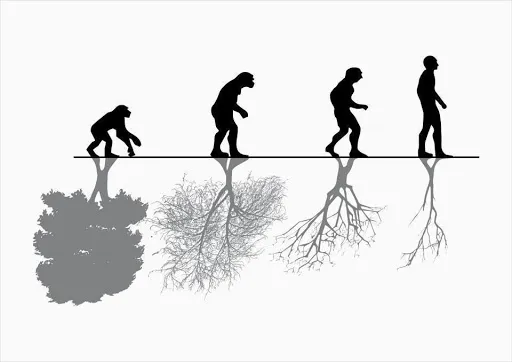
Detailing the features in virtue of which an organism is a specimen of the species Homo sapiens is a purely biological task. Whether such specification is achievable and, if so how, is controversial. It is controversial for the same reasons for which it is controversial what conditions need to be met for an organism to be a specimen of any species. These reasons derive from the theory of evolution.
A first step to understanding these reasons involves noting a further ambiguity in the use of the expression “human nature”, this time an ambiguity specific to taxonomy. The term can be used to pick out a set of properties as an answer to two different questions. The first concerns the properties of some organism which make it the case that it belongs to the species Homo sapiens. The second concerns the properties in virtue of which a population or metapopulation is the species Homo sapiens. Correspondingly, “human nature” can pick out either the properties of organisms that constitute their partaking in the species Homo sapiens or the properties of some higher-level entity that constitute it as that species. Human nature might then either be the nature of the species or the nature of species specimens as specimens of the species.
It is evolution that confers on this distinction its particular form and importance. The variation among organismic traits, without which there would be no evolution, has its decisive effects at the level of populations. These are groups of organisms that in some way cohere at a time in spite of the variation of traits among the component organisms. It is population-level groupings, taxa, not organisms, that evolve and it is taxa, such as species, that provide the organisms that belong to them with genetic resources (Ghiselin 1987: 141). The species Homo sapiens appears to be a metapopulation that coheres at least in part because of the gene flow between its component organisms brought about by interbreeding (cf. Ereshefsky 1991: 96ff.). Hence, according to evolutionary theory, Homo sapiens is plausibly a higher-level entity—a unit of evolution—consisting of the lower-level entities that are individual human beings. The two questions phrased in terms of “human nature” thus concern the conditions for individuation of the population-level entity and the conditions under which organisms are components of that entity
The theory of evolution transforms the way we should understand the relationship between human organisms and the species to which they belong. The taxonomic assumption of TP5 was that species are individuated by means of intrinsic properties that are individually instantiated by certain organisms. Instantiating those properties is taken to be necessary and sufficient for those organisms to belong to the species. Evolutionary theory makes it clear that species, as population-level entities, cannot be individuated by means of the properties of lower-level constituents, in our case, of individual human organisms (Sober 1980: 355).
The exclusion of this possibility grounds a decisive difference from the way natural kinds are standardly construed in the wake of Locke and Kripke. Recall that, in this Kripkean construal, lumps of matter are instances of chemical kinds because of their satisfaction of intrinsic necessary and sufficient conditions, viz. their atoms possessing a certain number of protons. The same conditions also individuate the chemical kinds themselves. Chemical kinds are thus spatiotemporally unrestricted sets. This means that there are no metaphysical barriers to the chance generation of members of the kind, independently of whether the kind is instantiated at any contiguous time or place. Nitrogen could come to exist by metaphysical happenstance, should an element with the atomic number 14 somehow come into being, even in a world in which up to that point no nitrogen has existed (Hull 1978: 349; 1984and there was some relationship of spatial contiguity between component individuals of the species at
and the individuals belonging to either the same species or the parent species at
. This is because of the essential role of the causal relationship of heredity. Heredity generates both the coherence across a population requisite for the existence of a species and the variability of predominant traits within the population, without which a species would not evolve.
For this reason, the species Homo sapiens, like every other species taxon, must meet a historical or genealogical condition. (For pluralistic objections to even this condition, see Kitcher 1984: 320ff.; Dupré 1993: 49f.) This condition is best expressed as a segment of a population-level phylogenetic tree, where such trees represent ancestor-descendent series (Hull 1978: 349; de Queiroz 1999: 50ff.; 2005). Species, as the point is often put, are historical entities, rather than kinds or classes (Hull 1978: 338ff.; 1984: 19). The fact that species are not only temporally, but also spatially restricted has also led to the stronger claim that they are individuals (Ghiselin 1974; 1997: 14ff.; Hull 1978: 338). If this is correct, then organisms are not members, but parts of species taxa. Independently of whether this claim is true for all biological species, Homo sapiens is a good candidate for a species that belongs to the category individual. This is because the species is characterised not only by spatiotemporal continuity, but also by causal processes that account for the coherence between its component parts. These processes plausibly include not only interbreeding, but also conspecific recognition and particular forms of communication (Richards 2010: 158ff., 218).
Importantly, the genealogical condition is only a necessary condition, as genealogy unites all the segments of one lineage. The segment of the phylogenetic tree that represents some species taxon begins with a node that represents a lineage-splitting or speciation event. Determining that node requires attention to general speciation theory, which has proposed various competing criteria (Dupré 1993: 48f.; Okasha 2002: 201; Coyne & Orr 2004). In the case of Homo sapiens, it requires attention to the specifics of the human case, which are also controversial (see Crow 2003; Cela-Conde & Ayala 2017: 11ff.). The end point of the segment is marked either by some further speciation event or, as may seem likely in the case of Homo sapiens, by the destruction of the metapopulation. Only when the temporal boundaries of the segment have become determinate would it be possible to adduce sufficient conditions for the existence of such a historical entity. Hence, if “human nature” is understood to pick out the necessary and sufficient conditions that individuate the species taxon Homo sapiens, its content is not only controversial, but epistemically unavailable to us.
Privileging Properties
The answer given by TP2 to the first question was in terms of the fully developed human form, where “form” does not refer solely to observable physical or behavioural characteristics, but also includes psychological features. This answer entails two claims: first, that there is one single such “form”, i.e., property or set of properties, that figures in explanations that range across individual human organisms. It also entails that there is a point in human development that counts as “full”, that is, as development’s goal or “telos”. These claims go hand in hand with the assumption that there is a distinction to be drawn between normal and abnormal adult specimens of the species. There is, common sense tells us, a sense in which normal adult humans have two legs, two eyes, one heart and two kidneys at specific locations in the body; they also have various dispositions, for instance, to feel pain and to feel emotions, and a set of capacities, such as for perception and for reasoning. And these, so it seems, may be missing, or under- or overdeveloped in abnormal specimens.
Sober has influentially described accounts that work with such teleological assumptions as adhering to an Aristotelian “Natural State Model” (Sober 1980: 353ff.). Such accounts work with a distinction that has no place in evolutionary biology, according to which variation of properties across populations is the key to evolution. Hence, no particular end states of organisms are privileged as “natural” or “normal” (Hull 1986: 7ff.). So any account that privileges particular morphological, behavioural or psychological human features has to provide good reasons that are both non-evolutionary and yet compatible with the evolutionary account of species. Because of the way that the notion of the normal is frequently employed to exclude and oppress, those reasons should be particularly good (Silvers 1998; Dupré 2003: 119ff.; Richter 2011: 43ff.; Kronfeldner 2018: 15ff.).
The kinds of reasons that may be advanced could either be internal to, or independent of the biological sciences. If the former, then various theoretical options may seem viable. The first grounds in the claim that, although species are not natural kinds and are thus unsuited to figuring in laws of nature (Hull 1987: 171), they do support descriptions with a significant degree of generality, some of which may be important (Hull 1984: 19). A theory of human nature developed on this basis should explain the kind of importance on the basis of which particular properties are emphasised. The second theoretical option is pluralism about the metaphysics of species: in spite of the fairly broad consensus that species are defined as units of evolution, the pluralist can deny the primacy of evolutionary dynamics, arguing that other epistemic aims allow the ecologist, the systematist or the ethologist to work with an equally legitimate concept of species that is not, or not exclusively genealogical (cf. Hull 1984: 36; Kitcher 1986: 320ff.; Hull 1987: 178–81; Dupré 1993: 43f.). The third option involves a relaxation of the concept of natural kinds, such that it no longer entails the instantiation of intrinsic, necessary, sufficient and spatiotemporally unrestricted properties, but is nevertheless able to support causal explanations. Such accounts aim to reunite taxonomic and explanatory criteria, thus allowing species taxa to count as natural kinds after all (Boyd 1999a; R. Wilson, Barker, & Brigandt 2007: 196ff.). Where, finally, the reasons advanced for privileging certain properties are independent of biology, these tend to concern features of humans’—“our”—self-understanding as participants in, rather than observers of, a particular form of life. These are likely to be connected to normative considerations. Here again, it seems that a special explanation will be required for why these privileged properties should be grouped under the rubric “human nature”.
The accounts to be described in the next subsection (3.2) of this entry are examples of the first strategy. Section 4 includes discussion of the relaxed natural kinds strategy. Section 5 focuses on accounts of human nature developed from a participant perspective and also notes the support that the pluralist metaphysical strategy might be taken to provide.