
introduction
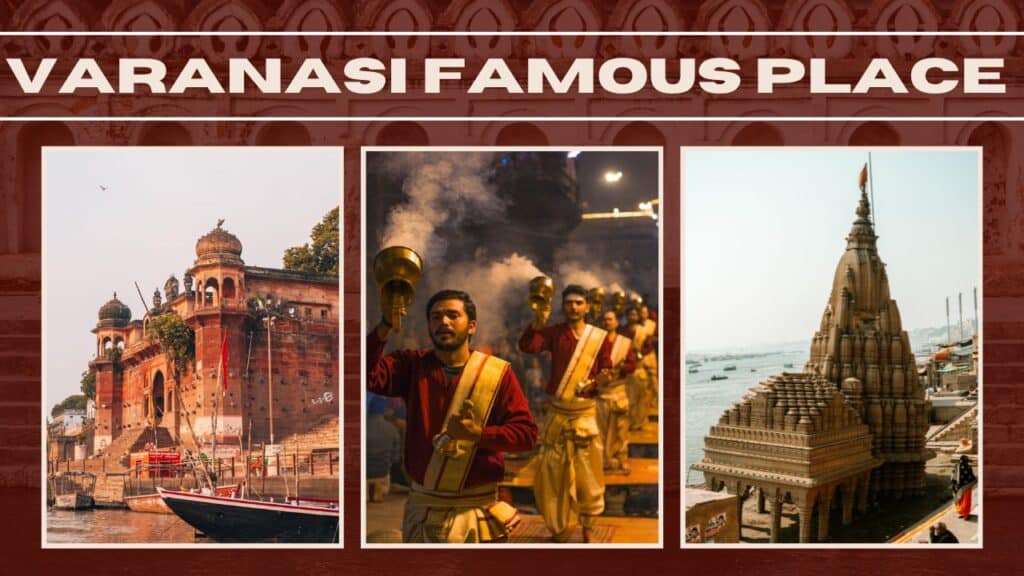
Varanasi is a famous city in Uttar Pradesh, India, known as the spiritual heart of the country and the oldest continuously inhabited city in the world. It is a major Hindu pilgrimage site, home to holy sites like the Kashi Vishwanath Temple dedicated to Lord Shiva, and the sacred Ganges River, where pilgrims bathe for purification and perform religious rites. Other popular attractions include the Sarnath site, where the Buddha gave his first sermon, and the numerous ghats, riverfront steps with a rich history and spiritual significance.
Cultural significance
- Varanasi is deeply associated with spirituality, mysticism, and classical Indian languages like Sanskrit and Hindi.
- It has been a center for influential figures like novelist Prem Chand and saint-poet Tulsidas, who wrote the Ram Charit Manas.
- The city is also a hub for yoga and has a strong cultural presence, reflected in its traditions and festivals.
Top Attractions in Varanasi
- Shri Kashi Vishwanath Temple
- Dashashwamedh Ghat
- Assi Ghat Varanasi
- Manikarnika Ghat
- Sankat Mochan
- Hanuman Temple,
- Varanasi
- Banaras Hindu
- University
- Shri Satyanarayan
- Tulsi Manas Mandir,
- Varanasi
- Ramnagar Fort
- Varanasi
- Shri Kashi Vishwanath
- Temple, BHU Campus,
- Varanasi
- Shree Durga Mata/Kushmanda Mandir, Durgakund (Kashi Khanda – 9 Durga)
- Sarnath
- Dhamek
- Bharat Kala Bhavan
- Museum, BHU
- Varanasi
- Bharat Mata Mandir
- Nepali Temple
- Tibetan Temple
- Varanasi
- Namo ghat
- Shri Batuk Bhairav
- Temple and Shri Aadi
- Bhairav Temple
- Kaal Bhairav Temple
- Ruchika Art Gallery
- history of kashi vishwanath temple
Standing on the western bank of India’s holiest river Ganges, Varanasi is the oldest surviving city of the world and the cultural capital of India. It is in the heart of this city that there stands in its fullest majesty the Kashi Vishwanath Temple in which is enshrined the Jyotirlinga of Shiva, Vishweshwara or Vishwanath. Here gravitate the teeming millions of India to seek benediction and spiritual peace by the darshan of this Jyotirlinga which confers liberation from the bondages of maya and the inexorable entanglements of the world. A simple glimpse of the Jyotirlinga is a soul-cleansing experience that transforms life and puts it on the path of knowledge and bhakti. Vishweshwara Jyotirlinga has a very special and unique significance in the spiritual history of India. Tradition has it that the merits earned by the darshan of other jyotirlinga scattered in various parts of India accrue to devotee by a single visit to Kashi Vishwanath Temple.
Deeply and intimately implanted in the Hindu mind, the Kashi Vishwanath Temple has been a living embodiment of our timeless cultural traditions and highest spiritual values. The Temple has been visited by all great saints- Adi Shankaracharya, Ramkrishna Paramhansa, Swami Vivekanand, Goswami Tulsidas, Maharshi Dayanand Saraswati, Gurunanak and several other spiritual personalities. The Kashi Vishwanath Temple attracts visitors not only from India but abroad as well and thereby symbolises man’s desire to live in peace and harmony with one another. Vishwanath being a supreme repository of this spiritual truth thus strengthens the bonds of universal brotherhood and fellow feeling at the national as well as global levels.
On January 28, 1983 the temple was taken over by the Govt. of Uttar Pradesh and it’s management ever since stands entrusted to a Trust with Dr. Vibhuti Narayan Singh. Former Kashi Naresh, as president and an Executive Committee with Divisional Commissioner as Chairman. The Temple in the present shape was built way back in 1780 by Late Maharani Ahilya Bai Holkar of Indore. In the year 1785 a Naubatkhana was built up in front of the Temple by the then Collector Mohd. Ibrahim Khan at the instance of Governor General Warren Hastings. In 1839, The two domes of the Temple were covered by gold donated by Punjab Kesari Maharaja Ranjeet Singh. Third dome still remains uncovered, Ministry of culture & Religious affairs of U.P. Govt. is taking keen interest for gold plating of third dome of Temple.
- History of Dashashwamedh Ghat
Dashashwamedh Ghat which precisely means the Ghat of 10 sacrificed horses (Dash – ten, Ashwa – Horses, Medh – Sacrifice) was earlier known as Rudrasaras in Indian scriptures. Lord Brahma sacrificed 10 horses at Rudrasaras and installed two Shivlings. The place was later renamed Dashashwamedh Ghat to pay respect to him.
Another perspective through the historical records marks the Dashashwamedh Ghat as the first historically documented site connected to the Bharasiva king of the Naga dynasty. The Bharatiya performed horse sacrifice at the Dashashwamedh Ghat after defeating the Kushan empire to please their deity, Shiva.
The first pucca ghat was built by Balaji Bajirao in 1738-40 and was later renovated by Maharani Ahilyabai Holkar in 1765. The present stairs were later installed by the government in 1965.
- history of Assi Ghat
Assi ghat is one of the important ancient Ghats of Kashi, if you go along with the stream of Ganges, then it is the first Ghat of Varanasi and on the south border of Kashi is situated at the confluence of Ganga and Assi (presently extinct) rivers.
The temples located on this ghat are from the first half of the 19th century, the Lakshminarayan Temple is of Panchayat style, it is not only related to three different deities, but also shows civil architectural styles. Asisangameshwar temple is one of the Shiva temples described in Kashikhand, which is a special master of puja. The Jagannath temple is a symbol of the Jagannath temple of Puri, in the latter part of the 18th century, this temple was built by the mahant of Jagannathpuri (Orissa), in Brahmavaivartpuran, it is considered Kashi’s Haridwar region in terms of the status of Kashi’s seven bodies. Apart from this, Nrusimha, Mayureshwar and Baneshwar Temple are situated in this Ghat area. According to Kashikhand, all other pilgrimages in the world are not even equal to its 16th part, so bathing on this ghat gets the benefit of bathing in all the pilgrimages.
The entire region of this Ghat in the east will be from Bhadaini ghat, it was Tulsidas ji who resided in a cave on this ghat and composed ‘Ramcharit Manas’ and in 1680 he left his life on this ghat. After the 19th century, the Ghat was divided into five Ghats, eighty, Gangamahal (1st), Rewa, Tulsi and Bhadaini Ghats. In 1902, Dulhin Radha Dulari Kunwar, the emperor of the Sursand State of Bihar State, purchased the land for the construction of the Ghat and the temple from Kashi Naresh Prabhunarayan Singh. In June 1927, the Ghat was not built due to the Queen’s accidental death, but his Laxminarayan Pancharatna temple built by the symbol of their religion and love for art. In the year 1988, with the assistance of the State Government, this Ghat was constructed firmly.
This Ghat is the center of Varanasi in the form of social, cultural and religious fun, the crowd has the highest number of daily baths. From 4 o’clock in the morning, people start jumping on this ghat and this activity continues this way throughout the day, after the sunset, the Ganga Aarti’s wonderful, with the echo of mantras and clandestine giants by trained saints (Pandas in hindi) the sight gets to see. Birth, Mudan Samskar, Upanayan, Marriage, Ganga Pujayya etc. Manglik work, festivals are
- history of manikarnika ghat
Manikarnika Ghat is one of the oldest ghats in Varanasi and has been accorded the highest position among other ghats by the holy scriptures in Hinduism. It is believed that if a person is cremated here, he immediately attains moksha (salvation). It is bound on both sides by the Scindia Ghat and Dashashwamedh Ghat. Like all the other ghats in Varanasi, the Manikarnika Ghat is surrounded by a fascinating mythological story which also tells us how it acquired its name. It is believed that when Goddess Adi Shakti, or Goddess Sati, jumped into the fire and immolated herself, Lord Shiva carried her burning body to the Himalayas. There, he was immersed in unending sorrow. Lord Vishnu, moved by his plight, sent forth his Divine Chakra (one of his weapons) which cut Goddess Adi Shakti’s body into 51 pieces. Each of the place where her pieces fell on Earth were declared as a Shakti Peeth. Because her earrings fell at this ghat, it was established as a Shakti Peeth and named Manikarnika since Manikarnika in Sanskrit means ear rings.